 Teotihuacan Pyramids Tours
What to Wear and Bring to Teotihuacan
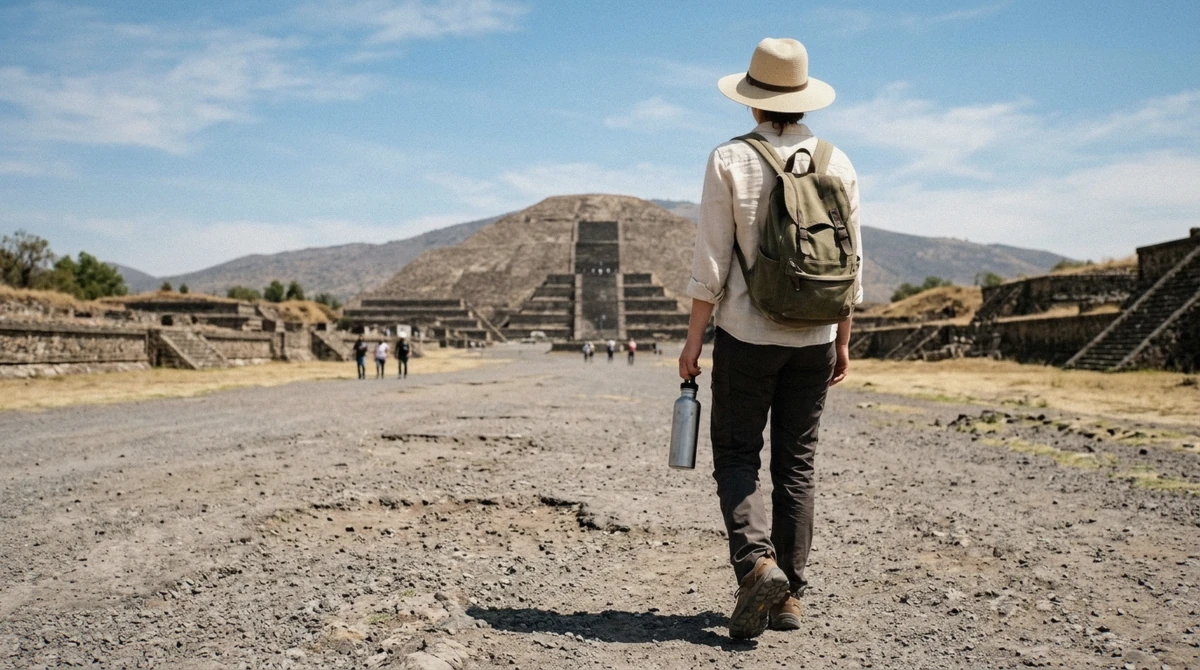
What to wear to Teotihuacan comes down to four things that actually matter: closed shoes with grip, sun protection that doesn't depend on shade, enough water to carry in yourself, and a layer for the 2,300-metre altitude. Tours provide the entry ticket and, on some listings, an umbrella or bottled water; everything else on your list is short and inexpensive. The local hook that decides most of it: there is no shade anywhere along the 2.4 km Avenue of the Dead, and the ground itself gets hotter than the air around it.
Quick answer
Wear closed, grippy shoes, sun protection you don't have to reapply constantly, and a light layer for the cool morning air at 2,300 metres. Tours supply the ticket and sometimes water or an umbrella; the rest of the list is short. The one local number that changes everything: ground temperatures on the open avenue pass 35 degrees Celsius at midday, with no shade to step into anywhere along its 2.4 km length.
Key takeaways
- Closed shoes with real grip are the one non-negotiable, the footwear section below explains why sandals fail here
- There's zero shade on the 2.4 km Avenue of the Dead, so sun protection is worn, not just carried
- The site sits at about 2,300 metres, where sun and dehydration both hit harder than the air temperature suggests
- Water and food vendors sit outside the gates, not inside, so pack water before you enter, or buy it at the café break on the early-access small-group tour
- Balloon flights, like the sunrise flight over the pyramids, require closed flat shoes at boarding and pre-dawn temperatures of 10 to 15 degrees Celsius even in summer
- Season changes the layer, not the footwear, see the best time to visit guide for what each month actually feels like
The Short Answer
Four things, in order of importance
Nothing about a Teotihuacan visit calls for specialist gear. The site is a long outdoor walk with no shade and a genuine temperature swing between early morning and midday, and the packing list follows directly from that. Closed shoes come first, because the surface is uneven stone and loose gravel rather than pavement. Sun protection comes second, because there's nowhere on the 2.4 km Avenue of the Dead to step out of direct light. Water comes third, because nothing is sold inside the gates. A light layer comes fourth, for the cool start before the day heats up.
Tours here provide the entry ticket on every listing, and a small number add bottled water, an umbrella, or a sunhat mention in their description. None of them supply sunscreen, and none guarantee shade at any point on site. Treat the tour as covering the ticket and the guide, and pack for the walk yourself.
What to Bring and Why
The essentials, and what happens if you skip them
This is the short version. Each item below solves one specific problem that shows up on this exact site, not a generic packing-list entry.
| Item | Why it matters here | What happens without it |
|---|---|---|
| Wide-brim hat | No shade anywhere on the 2.4 km avenue | Sunburn on the face and neck within the first hour |
| Sunscreen | Altitude of 2,300 metres means stronger UV than the air temperature suggests | Burns faster than you'd expect for the apparent heat |
| Refillable water bottle | Vendors sit outside the gates, not inside | Nowhere to buy water once you've entered, on a multi-hour walk |
| Closed, grippy shoes | Uneven volcanic gravel and worn stone, with shallow steps at intervals | Slips, a lost sandal, or a twisted ankle on the same stretch |
| Light layer or windbreaker | Cool mornings give way to hot midday sun fast | Left carrying a bulky jacket you didn't need by 10 AM, or cold at the 08:00 opening without one |
| Cash in small bills | Hat and snack vendors outside the gates, plus guide tips, run cash-based | Stuck without a hat at the gate, or unable to tip |
| Snack or light lunch | Food stalls sit outside the archaeological zone | A long, hungry stretch on a multi-hour visit with no food option inside |
Footwear, the One Thing People Get Wrong
What's actually okay, and what isn't
Footwear is the single item worth getting exactly right, because it's the one mistake that can genuinely end a visit early.
Item by item
- Closed walking shoes with grip: the right call for the whole visit. The surface is uneven volcanic gravel and worn ancient stone with shallow steps at intervals, and closed shoes with real tread are the practical requirement, not just a comfort preference
- Trainers or light hiking shoes: fine, and what most visitors actually wear; the terrain doesn't call for anything heavier
- Sandals with a secured back strap: workable only if you're not planning to climb the Pyramid of the Moon's open section or walk far off the paved path
- Flip-flops or unsecured sandals: not okay. The gravel and shallow steps catch loose footwear, and more than one review mentions a lost sandal or a twisted ankle on the same stretch
- Heels: not okay, for the same reason, on top of the added instability on stone
Colour, for what it's worth
Colour matters less here than at a wildlife or water destination, since there's no crew to spot from a distance and no reef life to avoid startling. Light colours and quick-dry synthetics beat dark colours and cotton for one reason only: heat and sweat, not visibility or any rule enforced at the gate. There's no legal restriction on camouflage-pattern clothing for civilians in Mexico either, so it isn't a category to avoid here the way it would be in some countries.
Sun and Altitude at 2,300 Metres
Why the sun hits harder here
Teotihuacan sits at about 2,300 metres above sea level, high enough that the atmosphere filters noticeably less ultraviolet light than it would at the coast. That means sunburn and dehydration both happen faster than the air temperature alone would suggest, which is why a morning that feels merely warm can still leave you burnt or lightheaded by early afternoon if you haven't been drinking water steadily.
The altitude also explains why the same effort feels harder here than it would at sea level. The walk down the Avenue of the Dead and up the Pyramid of the Moon's open section isn't technically difficult, but a short pause partway is normal and not a sign anything is wrong. Pace yourself, drink before you feel thirsty rather than after, and treat the first hour on site as an adjustment period rather than the moment to push hardest.
What to Bring: the Day Bag
The day-bag checklist
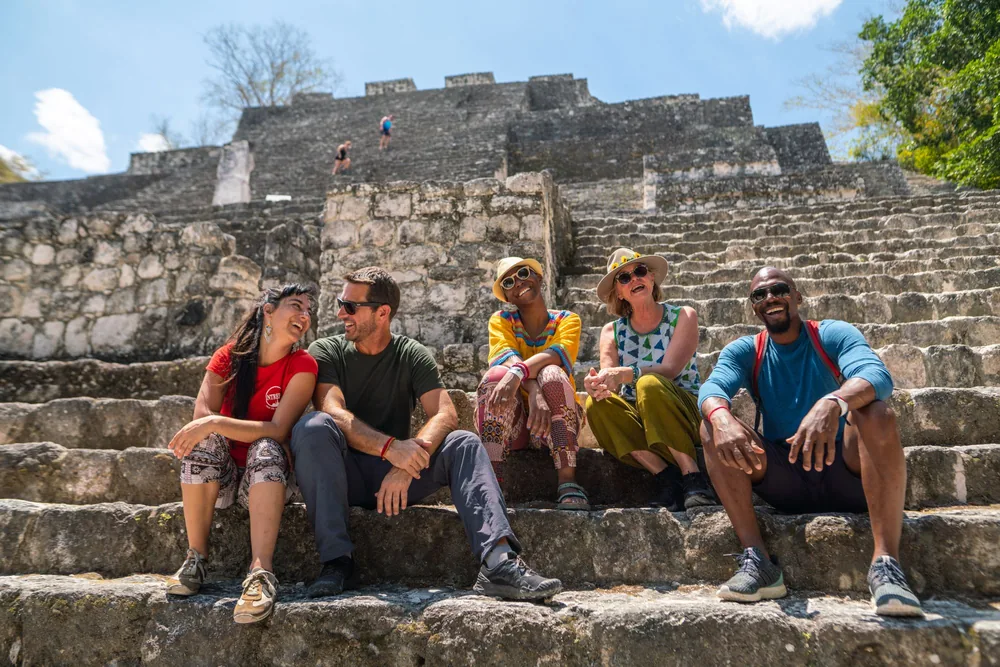
Everything below fits in a small day bag. None of it is available inside the archaeological zone once you've passed the gate, so pack it before you arrive.
- Refillable water bottle, filled before entry: no vendors inside the zone and no shade for hours at a stretch
- Wide-brim hat: continuous sun protection that doesn't need reapplying
- Sunscreen, reapplied before you enter: the altitude makes UV stronger than the air temperature suggests
- Closed, grippy shoes already on your feet: not something to bring, but the one item to get right before you leave the hotel
- Light layer or windbreaker: mornings and shaded stretches run noticeably cooler than midday
- Cash in small bills: for hats, water or snacks from vendors outside the gates, and for tips
- Snack or light lunch: food stalls sit outside the archaeological zone, not inside it
- Phone or camera with a full charge: little shade means little opportunity to sit and recharge
- A change of shirt in the car or bus if the day includes a cave meal or a long return ride: the heat and walking add up
- Motion-sickness tablet if you're prone to it and your route includes a winding drive back to Mexico City
What Teotihuacan Tours Provide, So You Don't Overpack
Reading the listings honestly
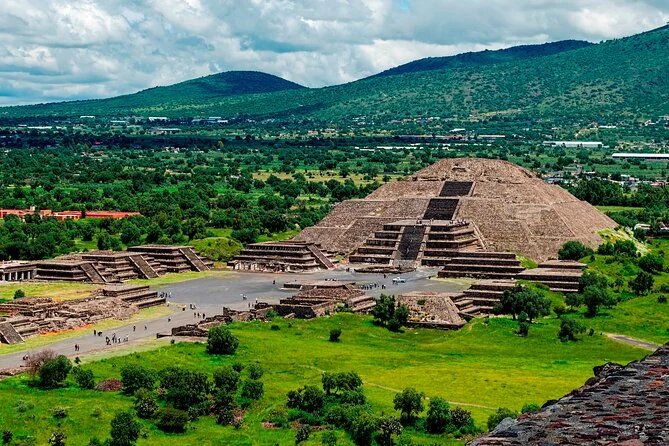
Inclusions vary more than you'd expect between tours covering the same site. The table below pulls directly from what each listing actually states, not a generic assumption about what a guided day usually includes.
| Item | Usually provided | Bring your own | Notes |
|---|---|---|---|
| Entry ticket | Yes, on every tour in this comparison | No | Park entry is bundled into every listed price |
| Bottled water | Rarely stated | Usually | Most listings don't mention water at all; the early-access small-group tour at least builds in a café stop en route |
| Umbrella or rain cover | Rarely | Yes, in wet season | Only one all-inclusive listing states an umbrella is provided |
| Sunscreen | No | Yes, always | No listing we checked supplies sunscreen; reviewers who forgot bought it at inflated prices at the site |
| Snack or meal | Depends on the tour | Usually | Meal inclusion ranges from none to a full breakfast, see each tour's own listing before assuming |
| Hat | No | Yes | Reviewers note hats are sold at the site but cost more than bringing your own |
| Comfortable seating and AC transport | Yes, on the bus tours | N/A | The most-booked morning tour runs a modern AC bus with a toilet and USB charging on board |
| Guide commentary on what to wear or bring | Rarely stated up front | Check ahead | Most listings assume you'll arrive already prepared for sun and walking |
What NOT to Wear or Bring
The short list of real problems
None of this is arbitrary. Every item below has caused an actual, documented problem for a visitor on one of the tours we track.
- Flip-flops or any unsecured sandal: loose footwear on gravel and shallow steps has cost more than one traveller a twisted ankle or a lost shoe
- Heavy jewellery: nothing to gain wearing it, and something to lose in a crowd or while climbing the Moon pyramid's open section
- A backpack or selfie stick, if a balloon flight is part of your day: operators explicitly refuse both in the basket
- Professional cameras or tripods on some guided walking tours: at least one listing states these aren't allowed on the guided portion
- Anything you'd be upset to see coated in dust: the paths are volcanic gravel, and it gets on shoes, hems and bag straps by the end of the visit
- A single heavy jacket instead of layers: mornings are cool but midday heats up fast, and one bulky layer is harder to manage than two light ones
Dressing by Season
Dry season, November to May
Sun is stronger and more constant, with little cloud cover to soften it. A hat and sunscreen matter more here than in any other stretch of the year, and by May, when ground temperatures on open stone pass 35 degrees Celsius, a light long-sleeve layer can actually keep you cooler than bare skin under direct sun.
Wet season, June to October
Mornings still call for the same sun protection, since rain typically arrives as an afternoon storm rather than an all-day one. A light, packable rain layer earns its space in the bag for the walk back to the vehicle if a storm builds early. Full details on what each month actually brings are in the best time to visit guide.
Balloon Flights Have Their Own Rules
Closed shoes, no exceptions
The sunrise hot air balloon flight runs a stricter dress code than a ground tour. Closed flat shoes are required to board, no sandals and no heels, since the basket floor and the landing itself both call for stable footing. Backpacks and selfie sticks aren't allowed in the basket either, so anything you're carrying needs to fit in a pocket or be left with the transport.
The bigger surprise for most travellers is the cold. Pre-dawn temperatures at the launch field sit at 10 to 15 degrees Celsius even in summer, cooler again in the dry season, and pickup runs around 4:20 AM. Dress in layers you can shed once the sun is up and the flight is over, rather than a single warm jacket that becomes dead weight for the rest of the day.
Dressing for Your Trip
If Dry-season morning tour (November to May)
Little cloud cover to soften the sun, so a hat and reapplied sunscreen matter more than any other stretch of the year; a light long-sleeve layer can keep you cooler than bare skin once ground temperatures pass 35 degrees Celsius
If Rainy-season visit (June to October)
Mornings still call for the same sun protection, since storms typically arrive in the afternoon; pack a light, packable rain layer for the walk back to the vehicle if one builds early. See the best time to visit guide for what each month brings
If Sunrise balloon flight
Closed flat shoes are required to board, no sandals or heels; dress in layers for pre-dawn temperatures of 10 to 15 degrees Celsius even in summer, and leave backpacks and selfie sticks with the transport, the balloon flight doesn't allow either in the basket
If Midday arrival
Ground temperatures pass 35 degrees Celsius with no shade anywhere on the avenue; lean on light-coloured, quick-dry fabric and a wide-brim hat rather than an extra layer
What-to-Wear Questions People Ask
Can you wear jeans to Teotihuacan?
It works, but it isn't the best choice. Denim doesn't breathe or dry quickly, and by midday, with ground temperatures over 35 degrees Celsius and no shade, jeans get uncomfortably hot on the walk. A lighter, quick-dry fabric handles the heat better.
Can you wear shorts at Teotihuacan?
Yes, with no cultural dress code to work around at the site. The trade-off is sun exposure on bare legs across a shadeless walk, so pair shorts with sunscreen or accept the exposure.
Do you need hiking boots for Teotihuacan?
No. Closed trainers or light hiking shoes with grip handle the uneven volcanic gravel and worn stone fine; full hiking boots are more than the terrain calls for.
Is there anywhere to buy water or a hat once you're inside?
No. Water and snack vendors, along with hat sellers, sit outside the archaeological zone rather than inside it, so bring both with you before you enter.
What should you not bring to Teotihuacan?
Skip unsecured sandals, heavy jewellery, and a backpack or selfie stick if a balloon flight is on your itinerary, since operators explicitly refuse both in the basket.
How cold does it actually get in the morning?
Cool rather than cold on the ground, but genuinely cold at altitude for a pre-dawn balloon launch, where temperatures sit at 10 to 15 degrees Celsius even in summer. A light layer covers most mornings; balloon flights call for real layering.
Are there bathrooms at Teotihuacan?
Yes, but only near the gates, not along the avenue. Once you start the 2.4 km walk you are committed for the length of it, which matters more than it sounds when the round trip from the middle of the site back to a gate can take twenty minutes in full sun. Go before you set off, carry tissue and hand gel since neither is guaranteed, and keep small coins with you because some facilities near the entrances charge a few pesos.
How do you dress for Teotihuacan without looking like a tourist?
The honest answer is that sun protection wins over blending in here, since the site sits at about 2,300 metres with no shade on the avenue. What locals actually wear is plain and covered: a wide-brim hat rather than a branded cap, a light long-sleeved shirt rather than a vest, long trousers or a longer skirt, and closed walking shoes. Skip the hiking poles and the full expedition rig, which mark visitors far more than clothing does. Muted colours photograph better against the grey stone as a side benefit.
Most of what goes wrong on a Teotihuacan day is preventable with a hat, closed shoes and water carried in rather than bought inside. Get those three right, and everything else on the list is genuinely optional, whichever of the small-group pyramid tours you end up booking.