 Teotihuacan Pyramids Tours
Teotihuacan With Kids: What Actually Works
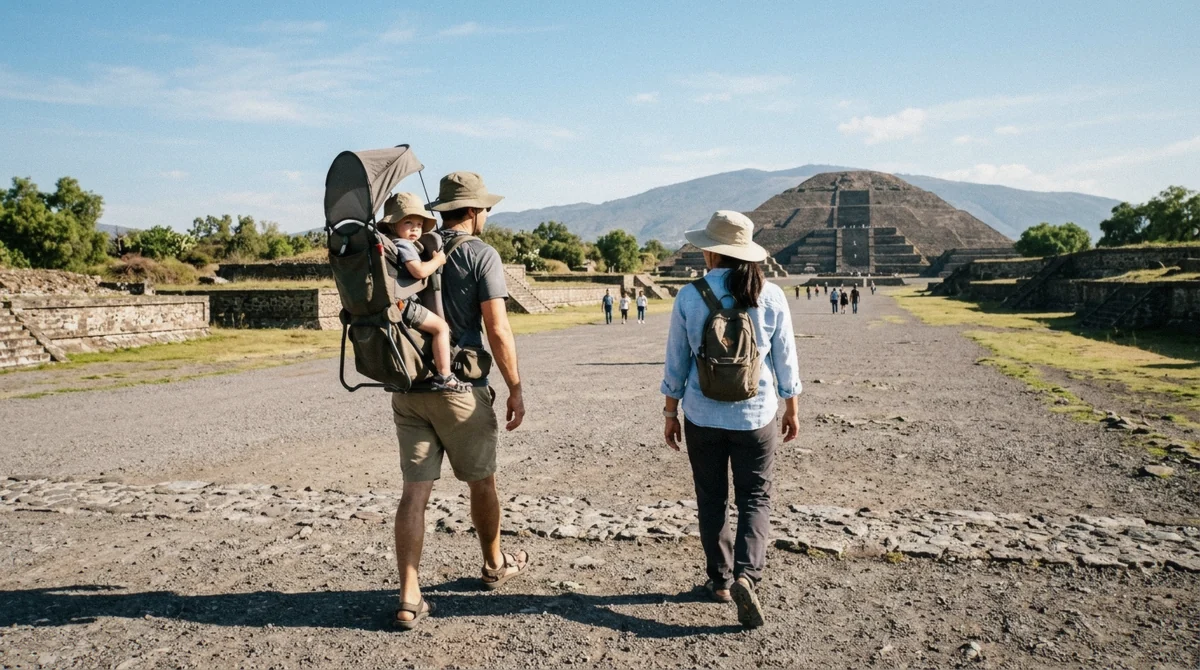
Teotihuacan with kids works at any age, and the tours in this comparison set no minimum age at all. Under-13s enter the site free. The real question is not whether a child is allowed in, it is whether the day suits them: a 2.4 km walk with no shade, in heat that passes 35 degrees Celsius at midday, on an unpaved surface that rules out a stroller. Since May 2025 there is a genuine reason to bring an older child specifically, the Pyramid of the Moon's reopened first section, 47 steps, a manageable climb that gives kids their own small adventure while the Pyramid of the Sun stays closed to everyone. What follows sets out which ages the day actually suits, which tour format fits a family, and what to carry.
Quick answer
Teotihuacan works well for children from about age six, when most manage the 2.4 km avenue with water breaks and a hat, and under-13s enter the site free. Younger children can visit too, carried rather than pushed, since strollers do not work on the unpaved surface. The half-day tour fits families best: it starts before opening and is back in Mexico City by 1:00 to 1:30 PM, well inside a young child's patience for a single outing.
Key takeaways
- Children under 13 enter the site free; no tour on the site sets a minimum age
- Strollers do not work here; a carrier or hiking backpack with a sunshade is the real answer
- From about age six most kids manage the full walk with breaks
- The half-day tour is back in Mexico City by 1:00 to 1:30 PM, better suited to a young child than a nine-hour day
- The Pyramid of the Moon's 47-step first section is a manageable climb for kids, while the Sun pyramid stays closed to everyone
- Vendors sit outside the site gates, so pack water and snacks in before you go in
The Short Answer
Which ages it works for
There is no operator minimum age anywhere in this comparison, and the site itself sets none either beyond the free-entry cutoff at 13. That means the honest limiting factor is not policy, it is heat, distance and terrain. Toddlers and infants can be carried through comfortably on a short format. Children from about age six upward generally manage the full avenue walk on their own feet, given breaks, shade stops and water. Older children and teenagers handle the day the same as an adult, and the 47-step Moon pyramid climb becomes a highlight rather than an obstacle.
The format matters as much as the age. A half-day tour that is back in Mexico City by early afternoon suits every age band better than a full nine-hour itinerary that adds a second or third site on top of the pyramids. One private tour in the comparison does set an age floor of its own, 15 and up, because it is not built around families in the first place; that is the exception rather than the rule across the eleven listings here.
What has not changed with age is the terrain itself: gravel paths, shallow uneven steps between tiers, and no paved or step-free route anywhere on site. A confident walker of any age manages it; a child who struggles with uneven ground at home will struggle here too, regardless of how old they are.
Age Bands: What Works and What to Skip
None of the eleven tours in this comparison state a minimum age, so the table below is a practical readiness guide rather than a policy lookup.
| Age band | What works | What to skip | How long to plan |
|---|---|---|---|
| Infant / toddler (0 to 3) | Carried through in a hiking backpack carrier with a sunshade; short circuit of the avenue and the base of one pyramid | The Moon pyramid climb, the full 2.4 km avenue, any tour longer than a half day | 1.5 to 2 hours on site |
| Young child (4 to 6) | Ground-level walk with frequent breaks; watching from the base of the pyramids; simple explanations from a guide | The 47-step climb unless the child is confident on stairs; walking the full avenue without a stroller-free break plan | 2 to 2.5 hours on site |
| Child (7 to 11) | The full avenue walk with water breaks; the Pyramid of the Moon's first section, 47 steps; the obsidian workshop as a novelty stop | Nine-hour combined itineraries with two extra sites, which run past a realistic attention span | 2.5 to 3 hours on site |
| Tween / teen (12+) | The full site at adult pace, including the Moon climb; early-access or historian-led tours with more depth | Little needs skipping at this age beyond the closed Sun pyramid summit, which applies to everyone | 3 hours or the full tour length |
The day by age
A simpler cut by exact age, for planning how long to actually stay on site.
| Age | How long on site | What holds their attention | What to skip |
|---|---|---|---|
| Under 3 | 1.5 to 2 hours | Being carried through, watching from the base of a pyramid | The Moon pyramid climb, the full 2.4 km avenue |
| 3 to 5 | 2 to 2.5 hours | Short bursts of walking with breaks, simple explanations from a guide | The 47-step climb, unless the child is already confident on stairs |
| 6 to 9 | 2.5 to 3 hours | The Pyramid of the Moon's 47-step climb, spotting the jaguar and puma mural panels | Nine-hour combined itineraries stacking two extra sites |
| 10+ | 3 hours or the full tour length | The full site at adult pace, including the Moon climb and the closed-summit story | Little, beyond the closed Sun pyramid summit, which applies to everyone |
Which Tour Fits Which Family
If You have a toddler or infant
Take the half-day tour, back in Mexico City by 1:00 to 1:30 PM; skip anything over 6 hours
If Your kids are 7 to 11 and curious about history
The no-commercial-stops tour spends the full time at the pyramids with certified guides rather than at a shop, which holds a child's attention better than a shopping detour
If You want a private pace for a nervous or easily overstimulated child
The private historian tour with Hector runs your group only, with hotel pickup and a return by about 12:10 PM, though it is not suitable for children under 15
If Your teenager wants the full history, not the shortened version
The early-access tour puts the group on site at 08:00 to 09:00 for the quiet avenue and includes the obsidian workshop as a break in the walking
If You are combining the trip with other Mexico City sights in one day
Think twice with young children. The three-culture full-day tour runs 9 hours across three sites, which is a long day to ask of anyone under about ten
Strollers Do Not Work Here
Carrier, not wheels
The avenue and the ground around the pyramids are unpaved, dusty and uneven, with loose gravel and shallow steps at intervals. A stroller gets stuck, tips on the gravel, or simply cannot be pushed the 2.4 km length of the avenue. The practical answer is a hiking-style carrier or baby backpack, fitted with its own sunshade since there is no shade anywhere on the walk.
One tour in the comparison notes stroller accessibility and infant seating in its own vehicle, but that covers the transport to and from Mexico City, not the walk inside the site itself. Plan for the carrier regardless of which tour you book.
Heat, Water and Shade With Children
The real constraint is temperature, not distance
There is no shade anywhere on the Avenue of the Dead, and midday ground temperatures pass 35 degrees Celsius. Children dehydrate faster than adults and show fewer warning signs before they do, so the plan needs to build in water breaks before a child asks for one, not after.
Water and food vendors sit outside the archaeological zone, not inside it, so everything a family needs for the visit has to come in through the gate already packed. A wide-brim hat for every child, sunscreen reapplied rather than applied once at the car, and a planned rest stop roughly every 30 to 40 minutes of walking keep the heat from becoming the story of the day.
The altitude adds to this without being obvious about it. The site sits at about 2,300 metres, where sun exposure is stronger and dehydration sets in faster than the air temperature alone would suggest. A child who seems fine on a similar walk at sea level can tire noticeably faster here, which is one more reason the shorter half-day format tends to work better than a long one.
Which Tour Format Suits Families
Shorter beats longer, almost every time
The half-day format is back in Mexico City by 1:00 to 1:30 PM, which fits a nap schedule and a young child's patience far better than a nine-hour itinerary stacking two or three sites into one day. That single fact should drive the booking decision for families with children under about ten more than any other feature on the tour listing.
A private tour, where available, gives a family control over pace, which matters more with kids than with adult travelers: a group tour holds to its own schedule regardless of whether a child needs an extra ten minutes in the shade. Where a private option is not affordable or available, a smaller group cap, 15 travelers or fewer, is the next best thing, since a smaller group moves and stops more flexibly than a full 50-seat bus.
What Kids Actually Find Interesting
The moments that land, and the ones that don't
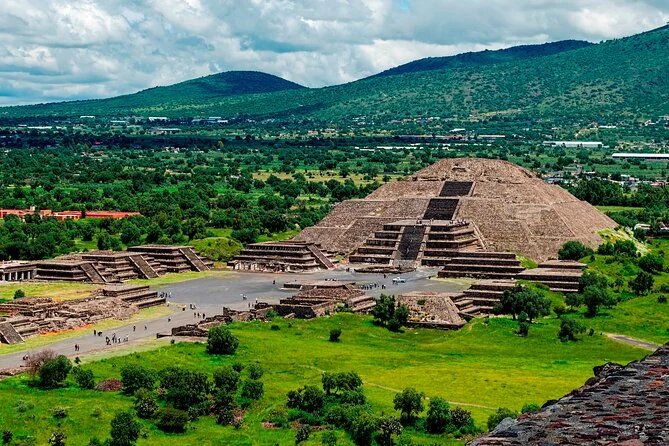
The 47-step climb to the Pyramid of the Moon's first platform is the single most reliable hit with children old enough to attempt it: it is a real, physical achievement with a payoff view at the top, on a scale a child can complete without an adult carrying them. Guides who point out the jaguar and puma mural panels along the avenue, faint painted evidence that the entire city was once brightly colored, tend to hold a child's attention better than a straight recitation of dates and dynasties.
The long, flat stretches of the avenue between structures are the part most likely to feel dull to a young child, since there is little to look at beyond open ground and heat. A guide or parent who breaks that stretch into a game, spotting the next landmark, counting steps, works better than pushing straight through it. The obsidian workshop stop that several tours include doubles as a genuine break from walking, whatever a family thinks of its commercial framing; more on that stop and how it fits the day sits in our morning-versus-afternoon guide.
What honestly does not land with most kids is a guide who spends long stretches on dates, dynasties and archaeological terminology without pausing for a physical or sensory moment. The tours in this comparison that pace themselves around structures rather than a continuous lecture, with a stop at each pyramid rather than commentary delivered while walking, tend to suit families better for exactly this reason.
Family Day Bag
What to actually pack
Everything on this list needs to come in through the gate, since vendors sit outside the site rather than inside it.
- Water, more than seems necessary, one bottle per person minimum
- Wide-brim hats for every child and adult
- Sunscreen, reapplied through the day rather than applied once
- A hiking-style child carrier with its own sunshade, if traveling with a toddler or infant
- Snacks that hold up in heat, nothing that melts
- A small first-aid kit with blister plasters for the uneven stone
- A light long-sleeve layer for the early-morning cold on early-departure tours
- Cash in small bills for the entry gate and any optional stops
Practicalities: Toilets, Food and Tickets
The logistics that matter with kids
Toilets sit near the site gates, not scattered through the walking route, so plan a stop before setting off from the entrance rather than partway along the avenue. Food is the same story as water: nothing is sold inside the archaeological zone itself, so a packed snack matters more with children than with adults who can simply wait until they are back at the bus.
On tickets, under-13s enter free, which is worth confirming at booking on any tour that charges per person, since the free entry applies to the site admission rather than automatically to a shared bus seat. A handful of tours in the comparison include a family-relevant note directly in their listing, such as stroller accessibility for the vehicle itself or infant seating; check the individual tour page for the exact wording before booking if that detail matters to your trip.
Most pickup points sit in central Mexico City, which usually means a hotel-to-meeting-point walk or short taxi ride before the tour even starts. With small children, build that transfer time into the morning rather than assuming pickup starts the moment you leave your room; a rushed, hungry start to a hot day is the easiest part of the trip to fix in advance and the hardest to recover from once it has already gone wrong.
Questions About Visiting Teotihuacan With Kids
What is the minimum age to visit Teotihuacan?
None. No tour in this comparison states a minimum age, and the site itself has no age restriction on entry. Under-13s enter free.
Can a five-year-old climb the Pyramid of the Moon?
Many can, since the reopened first section is only 47 steps across five platforms, a shorter climb than it looks from the ground. A child who manages a flight of stairs confidently at home will likely be fine here; one who tires quickly on stairs may need to sit this part out while the rest of the family climbs.
Is Teotihuacan too hot for young children?
It can be, at midday. Ground temperatures on the open avenue pass 35 degrees Celsius with no shade anywhere, which is hard on a young child regardless of hydration. An early departure that has the family on site before 09:00, or a half-day format that avoids the worst midday heat, manages this better than a standard mid-morning tour.
Can I bring a stroller to Teotihuacan?
Not usefully. The ground is unpaved gravel and uneven stone, and a stroller cannot cover the 2.4 km avenue on that surface. A hiking-style child carrier with a sunshade is the practical alternative for infants and toddlers.
How long should a family plan to spend at the pyramids?
Two to three hours on site, depending on the child's age, plus travel time from Mexico City. The half-day tour format, back in the city by 1:00 to 1:30 PM, matches this well for families with children under about ten.
Do children get a discount on Teotihuacan tours?
Site entry is free for under-13s. Tour pricing itself is not broken down by age in the listings in this comparison, so confirm any child pricing directly with the operator at booking.
What if my child gets tired or overheated partway through?
Build in a rest stop roughly every 30 to 40 minutes of walking rather than waiting for a child to ask. On a guided tour, a smaller group, 15 travelers or fewer, moves more flexibly if a family needs an extra few minutes in the shade than a full-size coach group does.
The honest verdict is that Teotihuacan suits families more than the bare heat and distance numbers suggest, provided the trip is built around a child's pace rather than an adult's. A half-day format, a carrier instead of a stroller, and the 47-step Moon climb as the day's centerpiece cover most of what makes the visit work for kids. For the detail either side of this page, see how much does it cost to visit teotihuacan.
The shorter formats families tend to pick are compared under half-day pyramid tours.